Ep. 18 The Science of Grief Nobody Taught You:
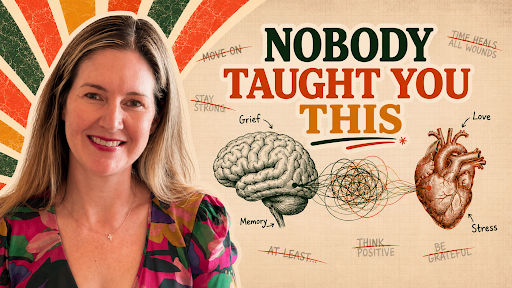


Most of us were never taught how to grieve. It turns out that's not an accident.
In this episode of Let Me Know If You Need A Podcast, Amy Steinhour and Kristen Beck sit down with Michelle Desmond, a thanatologist who walked away from a 15-year career at Starbucks to get her master's degree in death, dying, and bereavement. Her own concentrated experience of loss made her realize how little any of us actually understand about the thing that will eventually happen to all of us.
Michelle breaks down anticipatory grief, disenfranchised grief, and why the phrase "at least" quietly tells someone their pain doesn't measure up. She also explains why we became a society that doesn't talk about death, what corporate leaders consistently get wrong when supporting grieving employees, and why grief isn't something to complete, but something to integrate.
Meet the Expert
Michelle Desmond is a thanatologist, author, and former corporate executive who left a 15-year career at Starbucks to pursue a master's degree in death, dying, and bereavement. She brings an evidence-based lens to a subject most people were never taught to talk about, translating grief theory into language that's grounding and genuinely useful for caregivers, survivors, and anyone supporting someone through loss. Her work is especially valuable for people navigating illness, caregiving, and the kinds of grief that go unnamed and unacknowledged.
The Big Idea
When people think about grief, they usually picture the period after a death. Michelle's work makes the case that grief is far bigger, and far more common, than that.
That reality shows up as:
- Anticipatory grief that starts at diagnosis, long before any death occurs
- Disenfranchised grief: real loss that goes unacknowledged because of stigma, complicated relationships, or a loss others don't take seriously
- A culture that never taught any of us the actual mechanics of grieving
- Well-meaning phrases, like "at least," that quietly tell someone their pain doesn't count
The opportunity here is grief literacy: learning the actual vocabulary for what caregivers, survivors, and sidekicks are carrying, so nobody has to guess at, minimize, or apologize for what they're feeling.
Key Takeaways
- You can grieve someone who is still alive. Anticipatory grief is the loss of the life you had before diagnosis, hospital runs, and waiting on scan results, and it is real, documented, and doesn't require anyone's permission.
- Grief doesn't have to be about a death to count. Disenfranchised grief covers pet loss, job loss, complicated relationships, and losses others might minimize or dismiss.
- Retire the phrase "at least." "At least she lived a long life" or "at least you can have more children" tells someone their loss doesn't measure up. It's Michelle's number one thing to avoid.
- Don't compare losses. There is no ranking system for grief, and treating it like one isolates the person carrying it.
- Grief is integrated, not completed. Recovery isn't a finish line or a three-day bereavement policy. It's something people carry and adapt to over time.
Tools, Strategies, or Frameworks Mentioned
- Anticipatory Grief (Grief Theory): Names the loss caregivers and loved ones experience from diagnosis forward, helping people recognize what they're carrying before a death occurs.
- Disenfranchised Grief (Dr. Kenneth Doka): A framework for identifying grief that goes unrecognized or stigmatized, including pet loss, job loss, and grief after suicide, so people can name their experience without shame.
- Grief Integration Model: The reframe that grief isn't something to complete or get over, but something to integrate over time, giving caregivers and survivors permission to stop measuring their recovery against an arbitrary timeline.
Final Thoughts
The most powerful reframe isn't "you should be over this by now."
It's this:
Grief isn't a competition, and it isn't something you graduate from.
If you're carrying a loss nobody else has acknowledged, whether it's a diagnosis, a pet, a job, or a relationship that ended in a way people don't talk about, consider this your permission slip to name it as grief. And if you're supporting someone else through it, consider this your reminder to retire "at least" for good.
"Anything that starts with 'at least' can really diminish, isolate, and hurt people." — Michelle Desmond
🎧 Listen to the full episode: https://youtu.be/qxbc9RbdLbE
